Old Silk Saree Zari Price Per Gram: How Your Saree's Zari Is Actually Valued
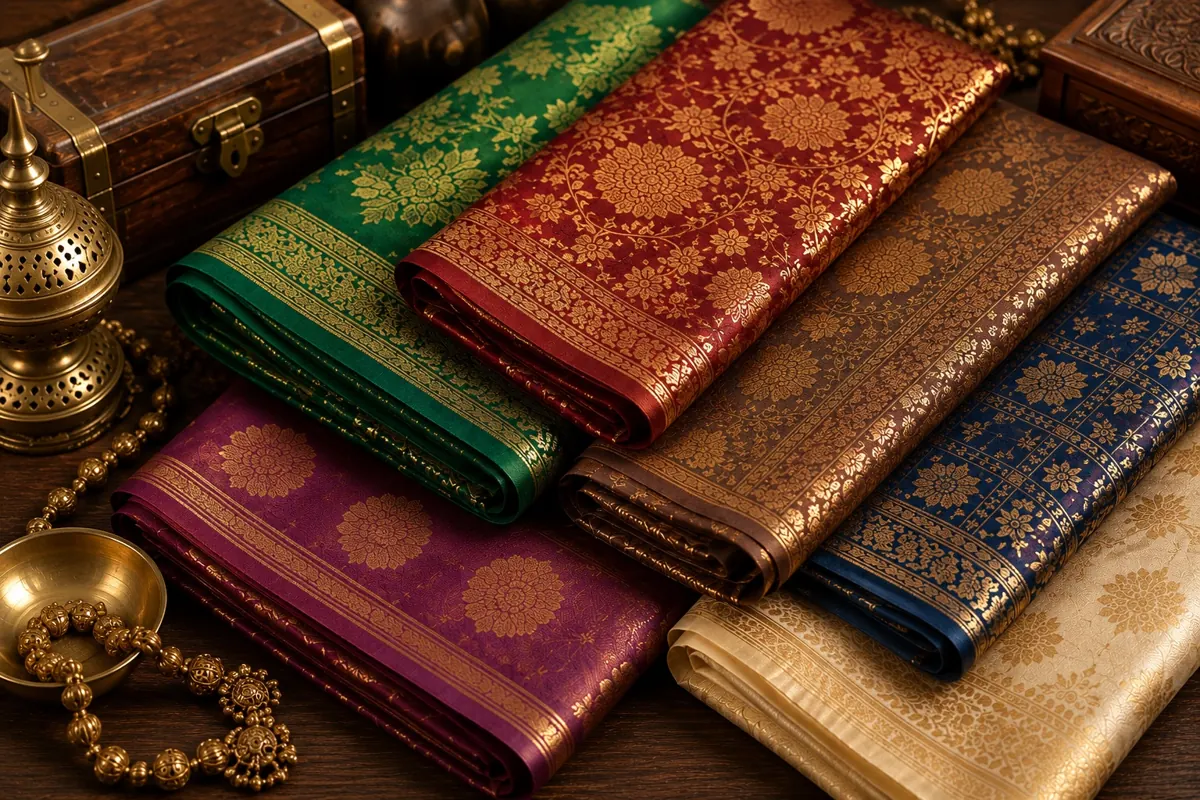
Almost every family in Bangalore has a trunk with a few old silk sarees in it. A wedding Kanchipuram from the 1980s, a heavy pattu your grandmother wore for every festival, a bridal saree that has not left the cupboard in twenty years. When people decide to sell these sarees, the first question is nearly always the same: what is the zari price per gram?
It is a fair question, but the honest answer is that there is no single fixed rate. The value of zari depends on what the zari is made of, how much of it is in the saree, and the price of silver on the day you sell. This guide explains how buyers like us work it out, so you can understand your quote before you accept it.
What "Zari Price Per Gram" Really Means
When people search for the old silk saree zari price per gram, they often imagine the whole saree being weighed and paid for at one rate. That is not how it works. A silk saree has two parts that carry value:
- The silk itself, which has value based on purity, weave and condition.
- The zari, the metallic thread in the border, pallu and body motifs, which can contain real silver and a thin coat of gold.
The "per gram" part applies to the zari, and specifically to the precious metal inside it. A gram of zari thread is not a gram of silver. Zari is a silk core wrapped with flattened metal wire, so only part of its weight is metal. That is why two sarees of the same weight can get very different quotes.
What Is Inside Pure Zari?
Traditional pure zari, the kind used in genuine Kanchipuram and many Mysore and Banarasi silks, is made in three layers:
- A fine red or natural silk thread forms the core.
- A flattened silver wire is wound tightly around that core.
- The silver is then coated with a very thin layer of gold, which gives zari its warm golden colour.
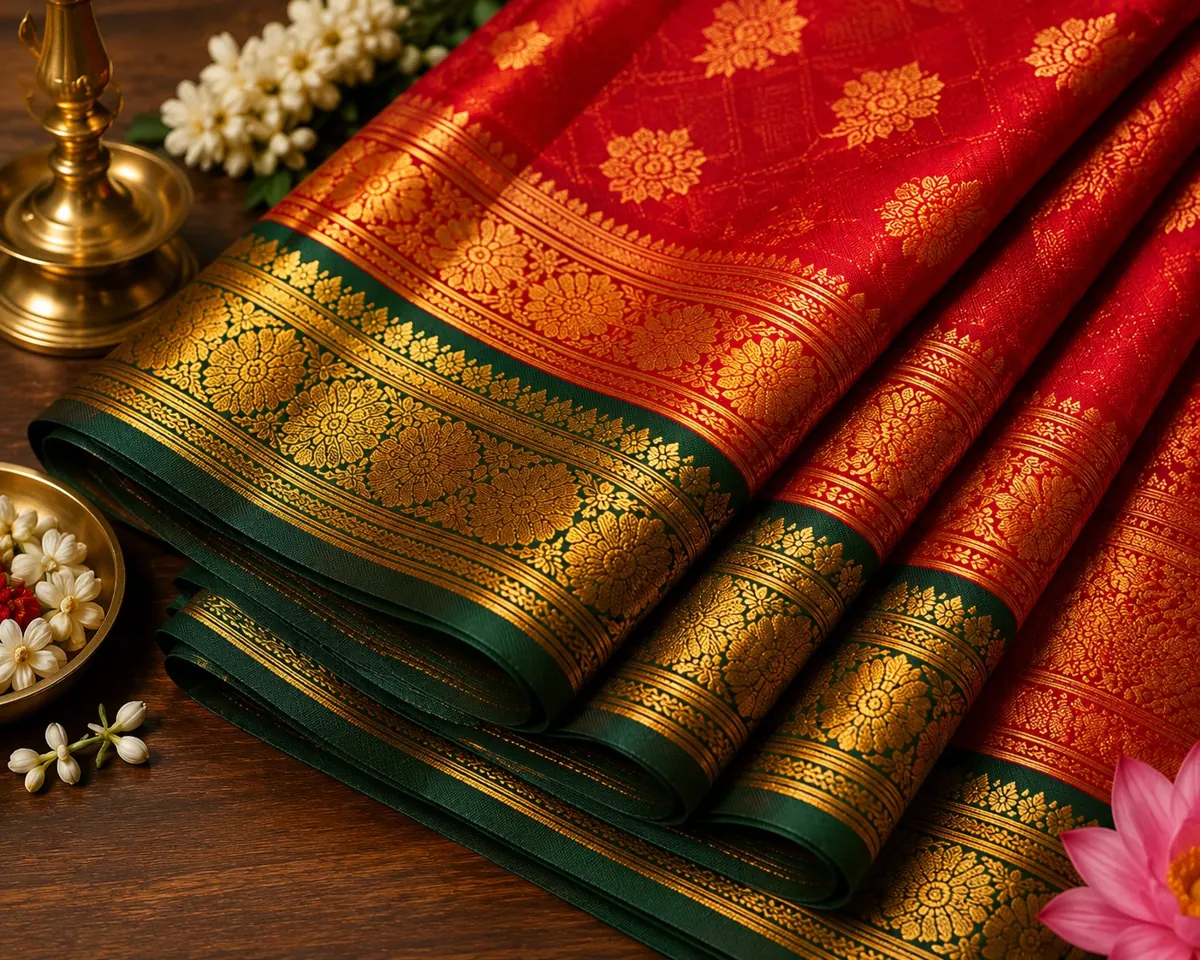
For Kanchipuram sarees, the zari standard linked to the GI (Geographical Indication) protection originally called for about 57% silver and 0.6% gold. In 2012, the Tamil Nadu government approved a revised standard of about 40% silver and 0.5% gold, as reported by FashionUnited. This is one reason older sarees, especially those woven before 2012, are often worth more per gram of zari than newer ones.
Not every saree uses pure zari, though. Many sarees use 2G, 1G or "tested" zari, which has little or no precious metal. You can read more about the history of the thread on Wikipedia's page on zari.
Why There Is No Fixed Zari Rate
If someone quotes you a flat zari price per gram over the phone without seeing the saree, be careful. Four things change the number:
- The silver rate changes every day. Since silver makes up most of the metal value, the zari rate moves with the market.
- The zari type varies. Pure zari has real silver. Tested zari uses copper wire and has almost no resale value as metal.
- The silver content varies by era and weaver. A saree from the 1970s or 1980s may carry richer zari than one woven last year.
- Recovery has a cost. Separating silver from silk thread is skilled work, and that cost is part of how any buyer arrives at a fair figure.
How Buyers Work Out the Value of Your Zari
Here is the method a fair buyer follows, step by step. Understanding it will help you judge any quote you receive.
- Confirm the zari type. The buyer checks whether the zari is pure, 2G, 1G or tested. Our guide on how to check pure zari in a silk saree explains the simple tests.
- Estimate the zari weight. The saree is weighed, and the buyer estimates how much of that weight is zari based on the border width, pallu design and body motifs. A plain body with a narrow border has far less zari than a heavy bridal saree.
- Estimate the silver content. Based on the age, origin and condition of the zari, the buyer estimates the share of silver in that zari weight.
- Apply the day's silver rate. The silver weight is multiplied by the current market rate.
- Add the silk value. Good quality pure silk has value of its own, separate from the zari.
A Simple Worked Example
The figures below are for illustration only. They are not today's silver rate or a quote.
| Step | Example figure |
|---|---|
| Total saree weight | 800 grams |
| Estimated zari weight | 200 grams |
| Estimated silver content of the zari | 40% (about 80 grams of silver) |
| Silver rate used for this example | Rs. 100 per gram (example only) |
| Metal value before recovery costs | About Rs. 8,000 |
In real life, the silver rate on the day, the actual zari weight and the true silver content all change this figure. A heavy bridal saree with older, richer zari can be worth considerably more, while a light saree with tested zari will be valued mostly for its silk.
Zari Types and What They Are Worth
| Zari type | What it is made of | Resale value as metal |
|---|---|---|
| Pure zari (real zari) | Silk core, silver wire, thin gold coating | Significant, based on silver content |
| 2G zari | Lower silver and gold content | Very low |
| 1G zari | Varies by maker, often closer to tested zari | Do not assume any |
| Tested zari, half fine, German silver | Copper wire with silver or gold coloured plating | None as precious metal |
| Metallic or plastic zari | Polyester film with metallic finish | None |
Even if your saree uses tested zari, do not throw it away. Good silk still has value, and many families are surprised by what a well kept saree can fetch.
What Else Affects the Price of an Old Silk Saree?
Zari is the biggest factor, but it is not the only one. When we evaluate an old silk or pattu saree, we also look at:
- Silk purity: pure mulberry silk is worth more than blends or art silk.
- Weave and origin: genuine Kanchipuram, Mysore and Banarasi silks are valued differently.
- Age: older sarees often carry richer zari and discontinued weaves.
- Condition: stains, tears and faded zari reduce the value, but damaged sarees still have recoverable silk and zari, so they are worth getting checked.
Tips to Get the Right Price for Your Old Silk Saree
- Do not cut out the zari yourself. Cutting borders off damages the saree and often lowers the total value.
- Keep any old bills or Silk Mark labels. Proof of pure zari or pure silk helps the evaluation.
- Insist on weighing in front of you. A transparent buyer will weigh your sarees where you can see the scale.
- Bring all your sarees together. Evaluating several sarees in one visit saves time and gives you a clear picture of their total value.
- Ask for an itemised quote. You should know what each saree is worth and why.
Selling Your Old Silk Sarees in Bangalore with Nakshatra
Nakshatra Kanchipuram Society has been buying old silk sarees since 1985. As old silk saree buyers in Bangalore with branches across the city and Karnataka, we keep the process simple:
- Contact us by call or WhatsApp on +91 97408 36690, or send photos through our free evaluation form.
- Free doorstep evaluation. Our expert checks the silk, the zari and the weave at your home, with no obligation to sell.
- Itemised quote. Your sarees are weighed in front of you and you get a clear offer for each one.
- Instant payment. If you accept, you are paid on the spot by cash or UPI.
We buy Kanchipuram, Mysore, Banarasi, bridal and antique silks, including damaged pieces. See the full list on our What We Buy section.
Frequently Asked Questions
What is the zari price per gram for an old silk saree today?
There is no fixed rate, because it depends on the day's silver price and how much real silver your zari contains. Pure zari is valued on its silver content, while tested zari has almost no metal value. A free evaluation is the only reliable way to know.
Is the whole saree weight used to calculate the zari price?
No. Only the zari portion carries metal value, and only part of the zari weight is silver. The silk is valued separately.
Are older silk sarees worth more?
Often, yes. Older Kanchipuram sarees were usually woven with zari that had a higher silver content, so they can carry more metal value per gram.
Can I sell a torn or stained silk saree?
Yes. Damaged sarees still have recoverable silk and zari, so they are worth having evaluated.
Do you buy old pattu sarees outside Bangalore?
Yes. We have branches across Karnataka and serve customers in many towns and cities. Call or WhatsApp us to check your area.
Find Out What Your Old Silk Sarees Are Worth
Get a free, no obligation doorstep evaluation from Bangalore's trusted old silk saree buyers. Weighed in front of you, paid on the spot.